The Emerald Ash Borer Crisis in Kingston
Over the past decade, the Emerald Ash Borer (EAB) has transformed the landscape of Kingston and the surrounding region. This invasive beetle, native to Asia, arrived in North America in the early 2000s and has since killed hundreds of millions of ash trees across Canada and the United States. The impact on Kingston's urban forest has been profound, with countless ash trees showing signs of decline, dieback, or complete mortality.
The scale of the infestation means that many property owners in the area are now facing difficult decisions about their ash trees. Some trees have already succumbed to the borer and are dead or dying, while others remain standing but are at risk. Understanding what has survived and what is still to come is essential for making informed choices about your property. Limestone City Tree Trimming has worked with dozens of homeowners to assess their ash trees and develop strategies to protect their landscape.
Recognizing the Signs of Emerald Ash Borer Damage
The first step in managing EAB is learning to spot the telltale signs of infestation. One of the most distinctive indicators is the presence of D-shaped holes in the bark of the tree. These small, quarter-inch exit holes are created when adult beetles emerge from beneath the bark in late spring and early summer. If you notice these characteristic holes on your ash tree, it is a clear signal that the tree is infested and will likely decline rapidly.
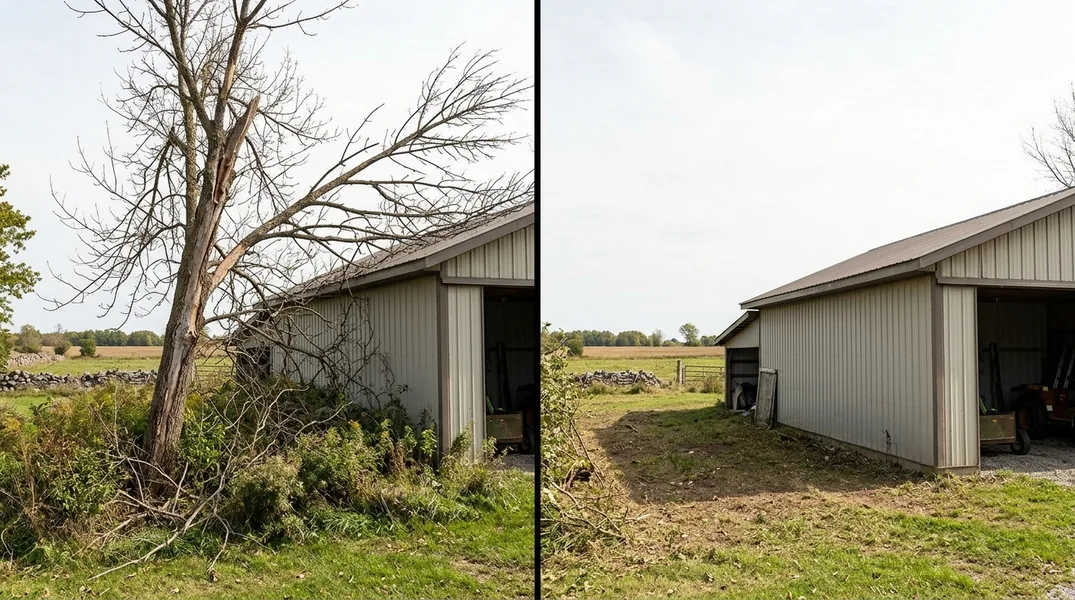
Beyond the D-shaped holes, watch for other ash borer signs that indicate trouble. The canopy may begin to thin from the top down, branches may die back progressively, and the bark may become loose or start to peel away. Some trees develop vertical splits in the bark as the tree attempts to compartmentalize the damage. A dying ash tree in Kingston often shows multiple symptoms at once, and once these signs become visible, the infestation is usually well established. Early detection is difficult because the larvae feed inside the tree for one to two years before emerging, meaning damage occurs long before any external signs appear.
When to Remove a Dying Ash Tree
Tree Removal is often the most practical solution for ash trees that are heavily infested or already dead. A dying ash tree in Kingston that shows advanced signs of EAB damage is unlikely to recover and poses safety risks as branches become brittle and prone to falling. Dead wood loses its structural integrity and can fail without warning, particularly during storms or heavy snow. If your ash tree is located near your home, a driveway, a fence, or areas where people gather, removal becomes a priority for liability and safety reasons.
The decision to remove an ash tree is not always straightforward, however. Some trees can be saved through early intervention, and removing a large, healthy-looking tree may feel premature. This is where a professional assessment makes all the difference. Limestone City Tree Trimming can inspect your tree, determine the extent of infestation, and recommend whether removal or treatment is the better choice. We can also discuss Kingston municipal requirements, as the City may require a permit for private tree removal depending on the tree's size and location. Contact us at (343) 505-5777 for a free estimate and expert guidance.
EAB Treatment Options and When They Work
Not every ash tree needs to be removed. If your tree is in good health, shows no visible signs of infestation, and you wish to preserve it, EAB treatment in Kingston is possible. The most effective chemical treatment is a systemic insecticide injected into the tree trunk. These products work by circulating through the tree's vascular system and killing larvae and adult beetles as they feed. Treatment is most successful on trees that are not yet infested or are in the very early stages of infestation, before the canopy begins to thin noticeably.
The challenge with treatment is timing and cost. A single treatment can range from several hundred dollars and must typically be repeated every one to two years for as long as the EAB threat persists in the region. Treatment also requires the tree to be in relatively good condition to respond well, so waiting too long reduces the likelihood of success. If your ash tree is already showing canopy decline or has D-shaped holes visible, treatment is unlikely to save it. An arborist can help you weigh the cost and commitment of treatment against the option of removal and replacement with a species resistant to EAB.
Ash Firewood Movement Rules and Disposal
Once an ash tree is removed, proper disposal of the wood is critical to preventing the spread of EAB to other regions. Many people assume they can cut up fallen ash trees or removed ash wood and use it as firewood, but ash firewood movement rules in Ontario are strict and for good reason. Moving infested ash wood from one location to another can transport beetle larvae to new areas and accelerate the spread of the infestation beyond Kingston.
The Ontario Ministry of Natural Resources and Forestry restricts the movement of ash firewood and ash logs outside of designated areas. If your ash tree is removed in Kingston, the wood should either be chipped on site, burned immediately, or disposed of through a licensed waste facility. Do not attempt to transport ash firewood to a cottage, another property, or sell it without checking current provincial regulations. When Limestone City Tree Trimming removes an ash tree, we handle disposal responsibly and can advise you on the legal options for your specific situation. This protects your property and helps contain EAB within the region.
What Ash Trees Have Survived and What Comes Next
Some ash trees in the Kingston area have survived the EAB outbreak, either because they are naturally more resistant, because they have been treated, or because they have not yet been infested. Black ash and green ash are both present in the region, and while no ash species is immune to EAB, individual trees vary in their susceptibility and survival rates. Trees in less densely infested areas or those that have benefited from early detection and treatment have a better chance of long-term survival.
However, the threat is not over. EAB populations in Ontario remain active, and new infestations continue to occur. Any ash tree that appears healthy today could become infested tomorrow. The best approach is to have your ash trees monitored regularly and to plan ahead for the possibility of treatment or removal. If you are considering planting new trees to replace those lost to EAB, choose species that are not susceptible to the borer, such as maple, oak, or birch. These native species will thrive in Kingston's climate and contribute to a more resilient urban forest. Contact Limestone City Tree Trimming at (343) 505-5777 to schedule a professional assessment of your ash trees and discuss your options for protecting your property's landscape.
Looking for a professional in Kingston? Limestone City Tree Trimming responds quickly for all your tree trimming needs.
Get a free estimateOur services : Tree Removal · Tree Trimming · Tree Pruning