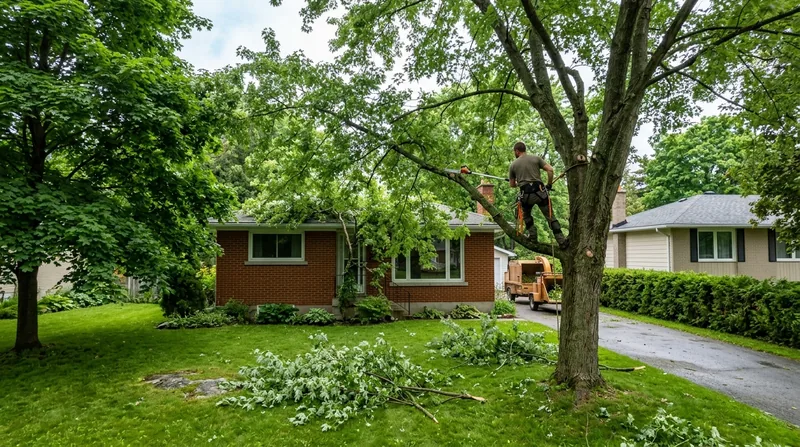




Tree pruning in Kingston keeps your mature maples, oaks and birches healthy, safe and structurally sound. The Kingston area's older neighbourhoods, ravine lots and tight backyards demand precision work that removes crossing limbs, weak branch forks and growth threatening your roof or garage. Our ISA Certified Arborists follow industry standards and never top trees. We have served homeowners and property managers since 2014, working year-round to maintain the canopy health that defines Kingston's residential character. Call us at (343) 505-5777 for a free estimate, or visit our contact page to request a site visit.
Why tree pruning matters in the Kingston area
Unpruned trees in Kingston accumulate dead wood, crossed branches and competing leaders that weaken structure and invite disease. Winter ice storms and summer windstorms exploit those weak points, turning a mature sugar maple or oak into a liability. Pruning removes the hazard before it becomes an emergency, extends tree life by decades, and improves light penetration to your property. Homeowners who delay pruning often face costlier removals later.
- Remove crossing and rubbing limbs that girdle bark and create entry points for insects and pathogens.
- Eliminate weak branch angles and co-dominant stems prone to splitting under snow or wind load.
- Clear growth away from rooflines, gutters, chimneys and garage structures to prevent damage and reduce maintenance.
- Thin dense canopy to improve air circulation and reduce ice and snow accumulation on branch tips.
- Preserve natural form and branch hierarchy rather than cutting back to stubs (topping is never offered).
Proper pruning cuts close to the branch collar, allowing the tree to compartmentalize and heal naturally. Our crews work safely at height and haul all debris off-site or chip it for mulch.
Local insight: A mature red oak or silver maple in Kingston typically sheds 3 to 5 large dead limbs annually in response to freeze-thaw cycles and late spring snow. Removing these hazards before they drop prevents roof punctures and injury, and costs far less than emergency removal of a failed limb.
How we prune trees in Westbrook and surrounding neighbourhoods
Our process begins with a ground-level assessment of the entire crown. We identify dead wood, structural defects, and clearance conflicts, then climb or use a lift to execute cuts following ANSI A300 standards. We work from the inside out, removing the smallest branches first, then addressing larger structural work. Every cut is made at the branch collar to promote rapid compartmentalization and healing. We respect the tree's natural form and never remove more than 25 per cent of the living crown in a single year.
- Inspect the crown from ground level and identify hazards, dead wood and structural conflicts.
- Climb or access the canopy using safe rigging and fall protection equipment.
- Remove dead, diseased and crossing branches, making cuts at the branch collar.
- Thin the crown to improve light penetration and air circulation without compromising structure.
- Clear growth away from utility lines, roofs and structures, respecting safe approach distances.
- Chip or haul all debris, leaving the site clean and the tree ready for healthy growth.
Pruning is most effective during dormancy (late fall to late winter), when the tree's energy reserves are lowest and healing begins immediately in spring. Cedar hedges are trimmed in late spring and summer to encourage dense regrowth. We schedule emergency pruning year-round, particularly after ice storms and summer windstorms that split or lodge branches.
Real example: A 25-metre sugar maple overhanging a garage in Cataraqui required removal of three large dead limbs, thinning of the lower crown to clear the roof line, and reduction of two co-dominant leaders threatening to split. The work took one day with two climbers, cost $485, and extended the tree's useful life by 15 to 20 years.
Pruning methods and when to use each
| Pruning method | Purpose and technique | Best timing |
|---|---|---|
| Structural pruning | Remove crossing limbs, weak branch angles and co-dominant stems to establish a single leader and balanced crown. Cuts at branch collar allow natural healing. | Late fall to late winter (dormancy) |
| Deadwood removal | Cut dead, diseased or insect-infested branches back to living wood or the branch collar. Removes entry points for pests and pathogens. | Year-round; urgent after storms |
| Crown thinning | Selectively remove branches throughout the crown to improve light penetration, reduce wind load and enhance air circulation. Never exceeds 25 per cent of living crown. | Late fall to late winter |
| Clearance pruning | Remove or reduce branches conflicting with rooflines, gutters, chimneys, garages or laneways. Respects safe distances from private electrical service entrances. | Late fall to late winter; or as-needed |
Each method follows the same principle: make cuts at the branch collar, preserve the tree's natural form, and never remove more living wood than the tree can compartmentalize in one growing season. Topping (cutting limbs back to stubs) is never offered because it weakens structure, invites disease and creates hazardous regrowth.
Permits and safety considerations for tree work in Kingston
The City of Kingston may require a permit for a private tree removal, and rules vary across the surrounding municipalities. Pruning work that does not remove the entire tree typically does not trigger a permit requirement, but we confirm the rules for your property before starting. If your pruning project involves a tree near your private electrical service entrance (the line running from the utility pole to your home), we maintain safe approach distances and never work on the public distribution network operated by your local utility or Hydro One. Any tree touching public lines is referred directly to the utility.
Our crews are fully insured and carry liability coverage for all work. We document our methods, hazards removed and site conditions so you have a record for your property file. If you are planning a removal or major structural project, an arborist report and risk assessment supports your municipal application and protects your interests.
For more information on our service areas and the municipalities we serve, visit our service areas page. To discuss your specific tree and receive a free estimate, call (343) 505-5777 or request a free quote online.
Seasonal timing and year-round availability
Trimming and structural pruning are most effective in late fall through late winter, when trees are dormant and healing begins immediately in spring. Cedar hedges are trimmed in late spring and summer to encourage dense, uniform regrowth. Emergency pruning after ice storms or windstorms is available year-round, with same-day response in many cases. If you have dead or hazardous branches threatening your home or property, do not wait for the ideal season; call us immediately at (343) 505-5777.
For routine pruning, winter is ideal because the tree's energy reserves are lowest, branch structure is fully visible without leaves, and our crews can work safely on frozen ground. Spring and early summer pruning is possible but slows healing slightly because the tree's resources are directed towards new growth rather than wound compartmentalization. We schedule most routine work between November and March to maximize tree health and minimize stress.
Learn more about our general tree trimming services or explore our full range of pricing and service options.
Prices Tree Pruning in Kingston — Indicative pricing
| Service | Price | Details |
|---|---|---|
| Small tree pruning (under 10 metres) | From $165 | Deadwood removal, light thinning and clearance work on young or small mature trees. |
| Medium tree pruning (10 to 20 metres) | From $285 | Structural work, crown thinning and hazard removal on standard residential trees. |
| Large tree pruning (over 20 metres) | From $425 | Complex structural pruning, heavy deadwood removal and significant clearance on mature oaks, maples and spruce. |
| Emergency or storm damage pruning | From $350 | Same-day or next-day response for fallen limbs, split branches, and storm-related hazards. |
| Travel and site assessment | Included | Free estimate and consultation within Kingston and the surrounding municipalities. |
| Free quote | No obligation | Call (343) 505-5777 or complete our online form for a detailed estimate within 24 hours. |
Indicative prices; free, personalized estimate within 24h at (343) 505-5777.