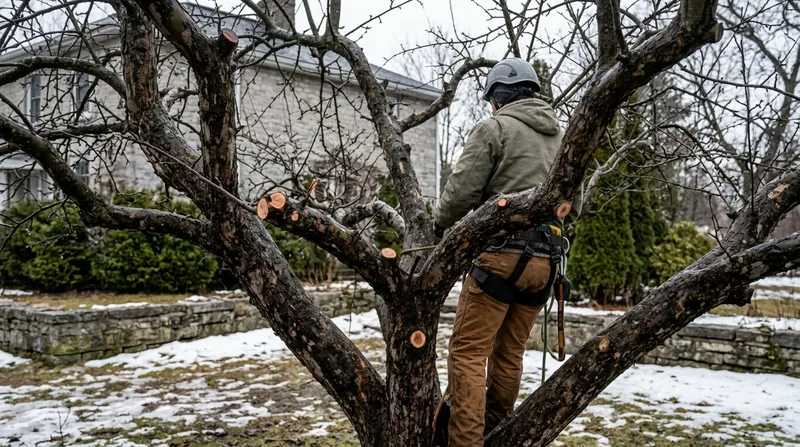




Fruit trees in the Kingston area demand precise pruning to stay productive and healthy. Whether you grow apple, pear, plum or cherry, fruit tree pruning in Kingston requires knowledge of growth habit, fruiting wood and the local climate. Limestone City Tree Trimming has been pruning orchards and backyard fruit trees since 2014, using ISA Certified Arborists who understand how to open the canopy, remove water sprouts and keep your trees within reach for harvest. Our crews work year-round across Kingston and the surrounding municipalities, tailoring each cut to species and your picking goals. Call us at (343) 505-5777 for a free estimate, or visit our contact page to request a visit.
Why Fruit Tree Pruning Matters in the Kingston Area
Unpruned fruit trees grow dense, shaded canopies where disease takes hold and fruit stays hidden in the interior. In Kingston's humid climate with its freeze-thaw cycles, neglected trees also accumulate dead wood and crossing branches that weaken structure. A well-pruned tree produces larger fruit, ripens faster and lives longer. We remove competing shoots, thin crowding limbs and establish an open centre so light reaches every fruiting spur.
- Remove water sprouts and vigorous upright growth that wastes energy.
- Clear crossing and rubbing branches to prevent disease entry and improve air flow.
- Thin the canopy to reduce shading and allow sunlight to ripen fruit.
- Maintain a manageable height so you can pick safely without a ladder.
- Prune to the species habit: open centre for apples and pears, modified central leader for cherries.
Each cut we make encourages stronger growth in the season ahead and reduces the risk of storm damage. Our arborists know which wood produces fruit and which should come out.
Local insight: A mature apple or pear tree in Kingston can produce 50 to 100 kg of fruit annually when properly pruned. Neglected trees often yield half that or less, with smaller, disease-prone fruit.
How We Prune Fruit Trees in Westbrook and Surrounding Areas
Our process begins with a walk around the tree to assess its structure, age and current health. We identify the main scaffold branches, spot dead wood and plan cuts to open the canopy without shocking the tree. We work from the ground up, making clean cuts at the branch collar and removing all debris from your property.
- Inspect the overall shape and identify the central leader or multiple main limbs.
- Remove all deadwood, broken branches and crossing limbs flush to the branch collar.
- Thin interior branches to increase light penetration and air circulation.
- Cut back vigorous water sprouts and competing upright shoots.
- Shape the tree to a manageable height and width for your property and picking access.
- Haul away all trimmings and chip material on site if requested.
Pruning typically takes two to four hours depending on tree size and condition. We also advise on follow-up care, including watering during establishment and the best time to prune again next season.
Example: A 6-metre cherry tree with dense interior growth and several crossing limbs in Greater Napanee takes roughly three hours to open and shape. Cost typically ranges from $275 to $425. We remove all debris and leave the site clean.
For larger orchards or multiple trees, we offer a package rate. Visit our pricing page to see our full range of options.
Pruning Methods and Timing
| Method | Description | Best Time |
|---|---|---|
| Dormant season pruning | Structural cuts to remove crossing wood, shape and thin canopy while the tree is at rest. | Late fall to late winter (November through February in Kingston) |
| Summer thinning | Light removal of water sprouts and interior shoots to improve fruit quality and ripening. | June through August |
| Post-harvest cleanup | Remove dead branches and storm damage after fruit is picked, before dormancy sets in. | September through October |
| Young tree training | Early pruning to establish strong scaffold branches and central leader on newly planted trees. | First two to three growing seasons, dormant or early summer |
Dormant season pruning is most effective because the tree responds with vigorous new growth in spring, and you can see the full structure without leaves. Summer pruning is lighter work, used mainly to remove vigorous shoots that waste the tree's energy and to improve air flow around ripening fruit.
Regulations and Site Access in Kingston
Fruit tree pruning on your own property is straightforward and does not typically require a municipal permit in Kingston. However, if your tree is located close to a property line or overhangs a neighbour's yard, we recommend discussing the work in advance. We always respect approach distances near private electrical service entrances and never work on or near the public distribution lines operated by your local utility or Hydro One. If a tree touches those lines, we refer the matter to the utility for safe removal of the hazard.
Our crews are fully insured and carry liability coverage for all work. We clean up all debris on site and chip material if you wish, leaving your property ready to enjoy your pruned trees. For questions about site conditions or access, call us at (343) 505-5777 or request a free estimate through our contact page.
Fruit Tree Species and Pruning Approach
Different fruits demand different strategies. Apple and pear trees thrive on open centre pruning, where we remove the central leader and encourage four to six main scaffold branches spreading outward. Cherry and plum trees respond better to a modified central leader, where a single main stem guides growth and smaller laterals hang off it. We adapt our technique to the species and your goals, whether you want maximum fruit production or a tree that fits a tight backyard.
- Apple trees benefit from aggressive thinning and water sprout removal to encourage fruiting spurs.
- Pear trees need careful pruning because they are prone to fire blight in humid conditions; we make clean cuts and avoid excessive wounding.
- Cherry trees prefer lighter pruning to avoid disease entry; we remove dead wood and crossing limbs but avoid heavy cuts.
- Plum trees respond well to renewal pruning, where we remove older fruiting wood to encourage new productive growth.
Our ISA Certified Arborists assess each tree and recommend the approach that suits your specific situation. See our main tree pruning service page for more detail on general pruning techniques.
Getting Started with Fruit Tree Pruning
Contact Limestone City Tree Trimming to schedule your free estimate. We visit your property, assess your trees and provide a clear quote with no hidden charges. Work is carried out by ISA Certified Arborists with over a decade of experience pruning fruit trees across Kingston, South Frontenac, Stone Mills and Loyalist Township. Call (343) 505-5777 during business hours or fill out the form on our contact page and we will reach out within 24 hours. Pruning is best scheduled in late fall through late winter for maximum benefit, but we also handle summer thinning and emergency cleanup year-round.
Prices Fruit Tree Pruning in Kingston — Indicative pricing
| Service | Price | Details |
|---|---|---|
| Small fruit tree pruning (up to 4 metres) | From $115 | Apple, pear, plum or cherry tree, light to moderate pruning |
| Medium fruit tree pruning (4 to 7 metres) | From $275 | Structural pruning, canopy opening, water sprout removal |
| Large or complex fruit tree (over 7 metres or poor condition) | From $425 | Extensive renovation, multiple trees or difficult access |
| Summer thinning or cleanup | From $150 | Post-harvest or mid-season water sprout and shoot removal |
| Travel | Included | In Kingston and the surrounding area |
| Free estimate | Free | No obligation, response within 24 hours at (343) 505-5777 |
Indicative prices; free, personalized estimate within 24h at (343) 505-5777.